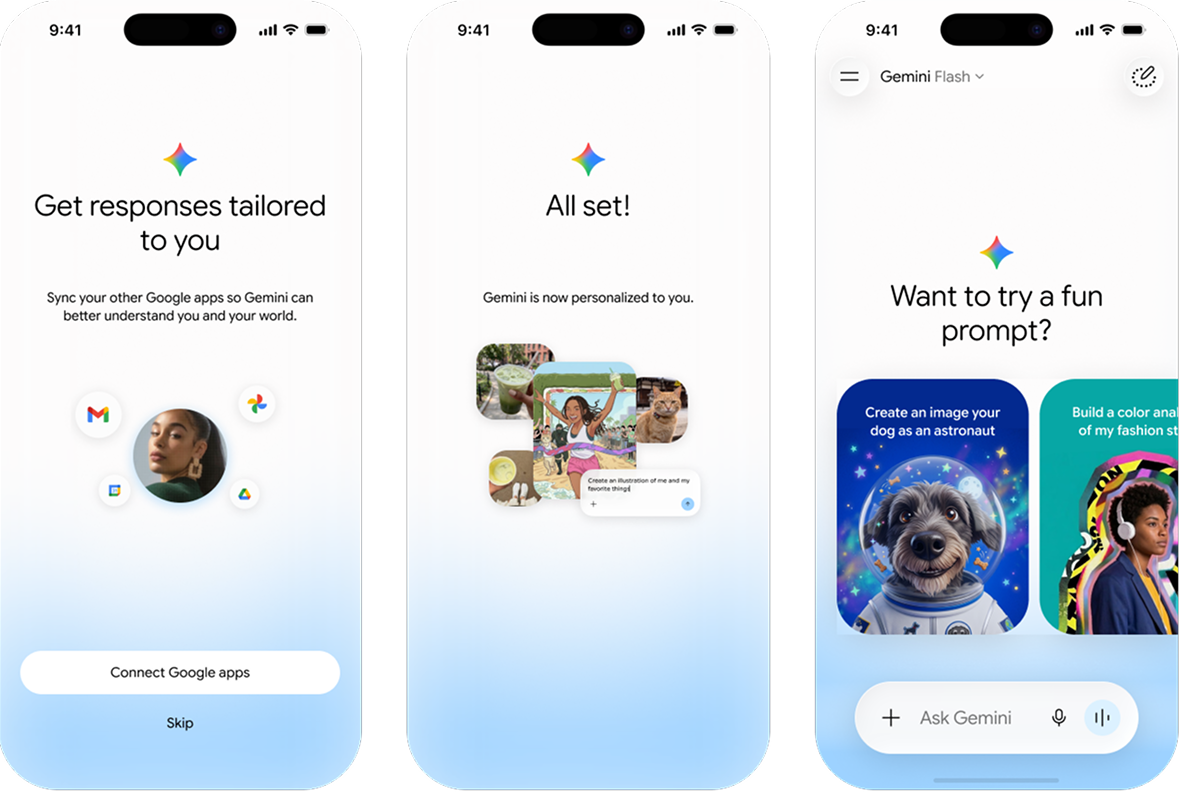
Gemini
Agent lead onboarding
New Gemini users arrived at a blank prompt box and a legal notice, with no sense of what the product could do for them. I led the design strategy for an agent led discovery and onboarding experience: it learns just enough about a person to offer high value starter prompts, then teaches them how to craft and refine prompts through a guided, co-creative loop.
Context
The cold start problem
The first thing a new user saw was legal. The second was an empty box, and the model knew nothing about them yet. People did not know where to start, and many never did.
1 in 3
new users left without sending a single prompt
~1 in 2
sent a single query before abandoning
2 in 3
did not come back after their first week
Principles
Humanize Gemini as a personal assistant
The question we set for ourselves: how might we humanize Gemini as a personal assistant, broadly and deeply, across experiences? Four principles guided the work.
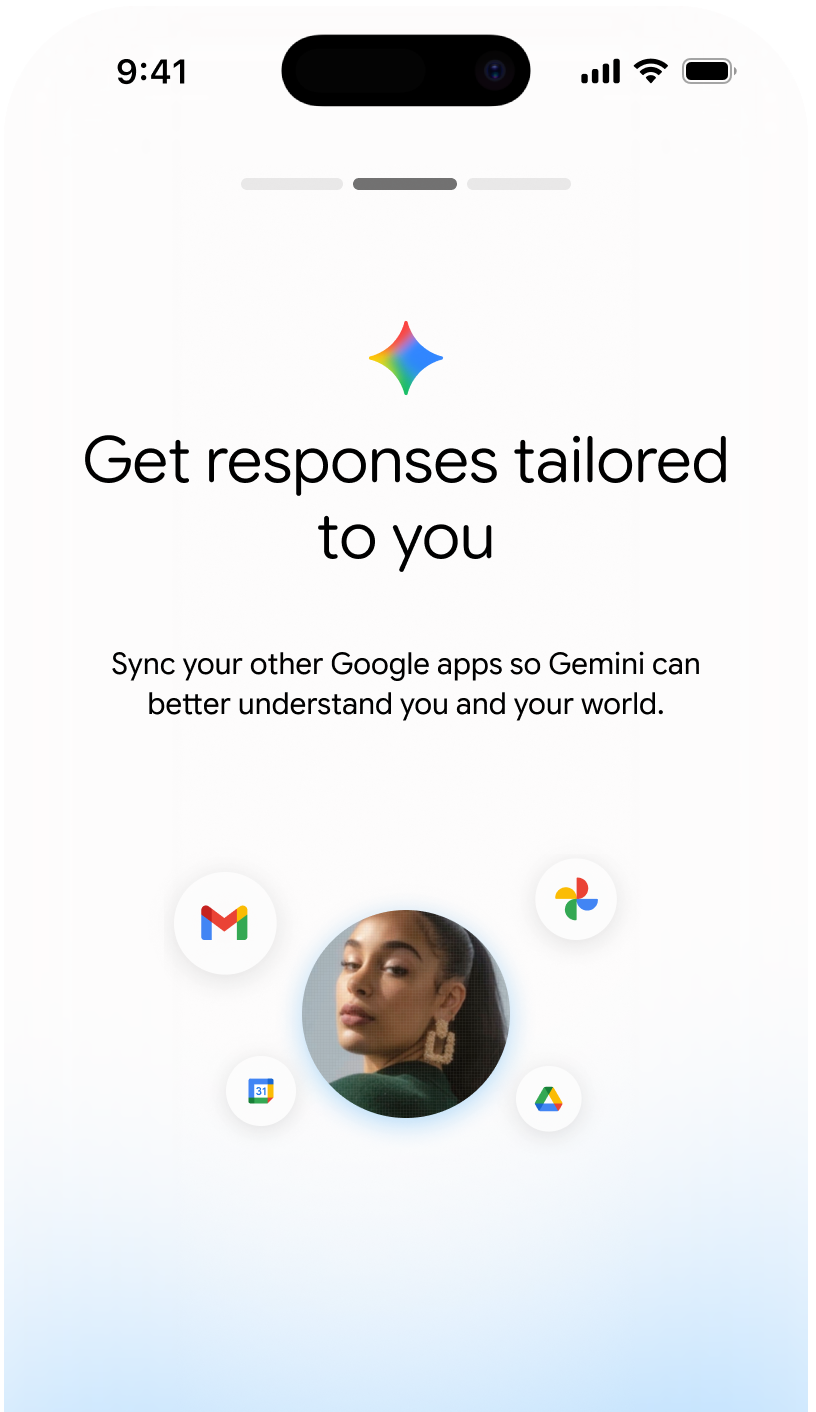
- Get to know who a user is, and use that context to deliver value quickly.
- Show users what Gemini can do, using splashy actions that demonstrate its skills.
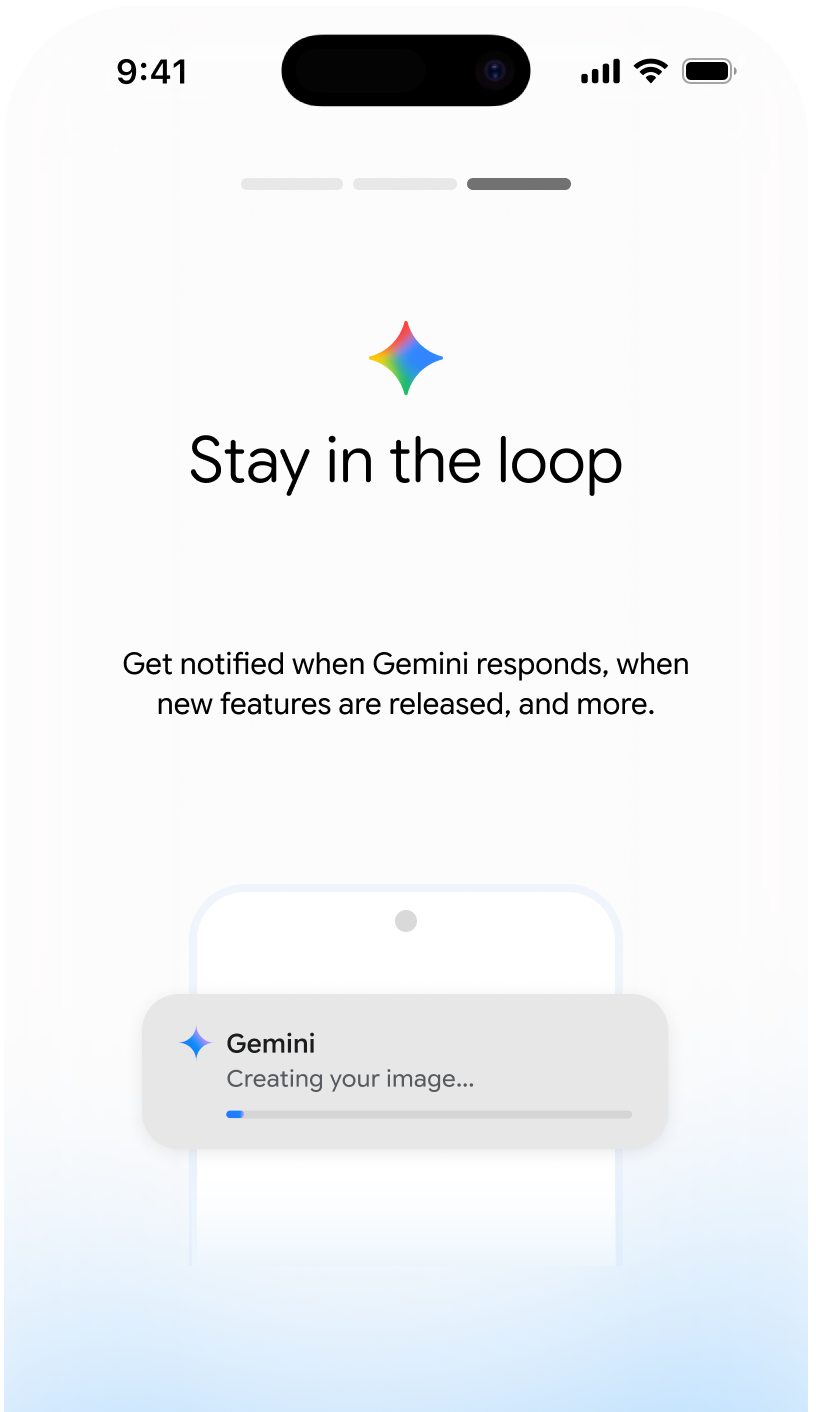
- Get users to engage regularly, so aha moments drive retention.
- Use the existing system to keep things simple, understandable, and scalable.
Decision 1
Make chat the core onboarding primitive
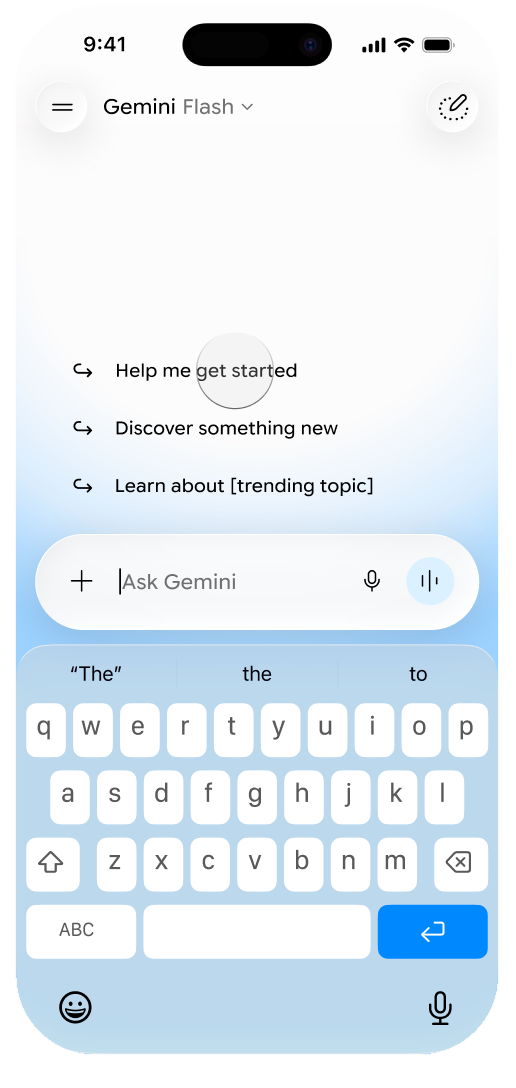
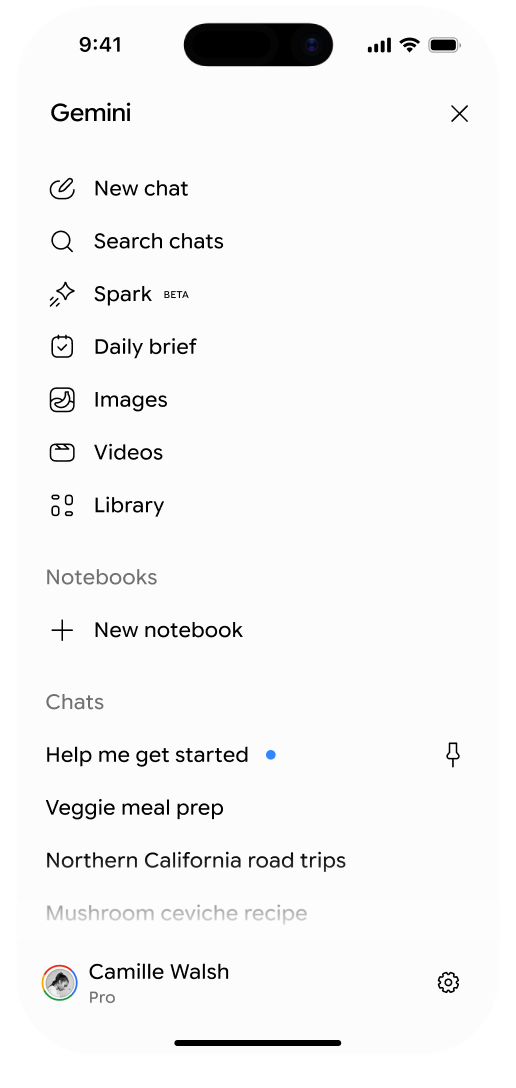
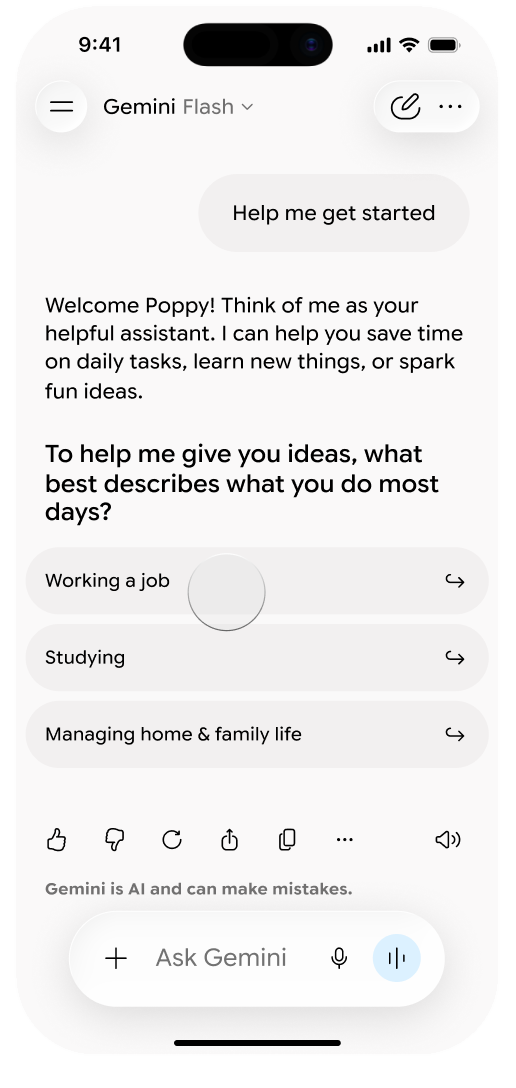
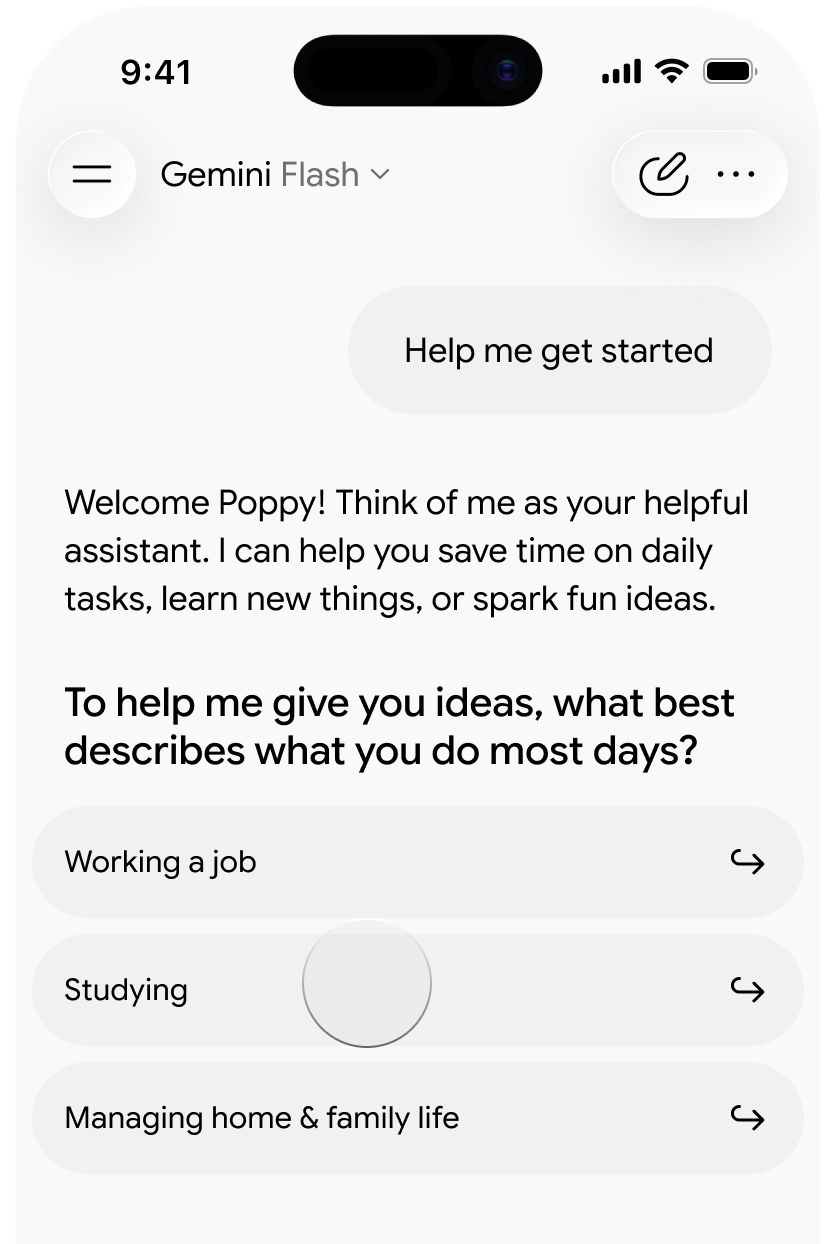
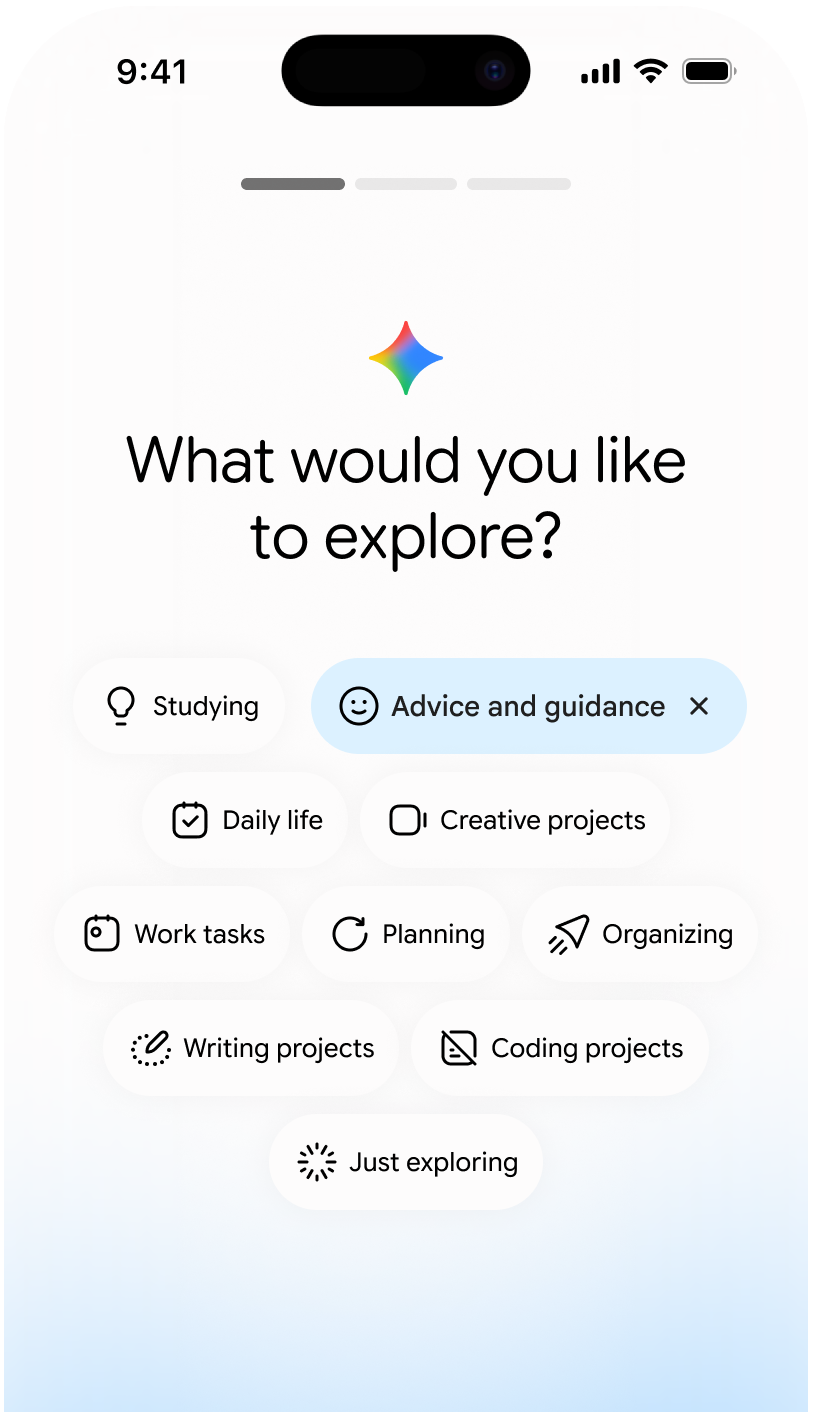
Onboarding should happen inside chat itself. A new user can start from a suggestion or ask for help getting started, and the model replies by asking one simple question about how they spend their days. Every suggestion after that is more relevant, and it all runs on the system people already use.
Decision 2
Three ways to drive discovery, retention, and usage
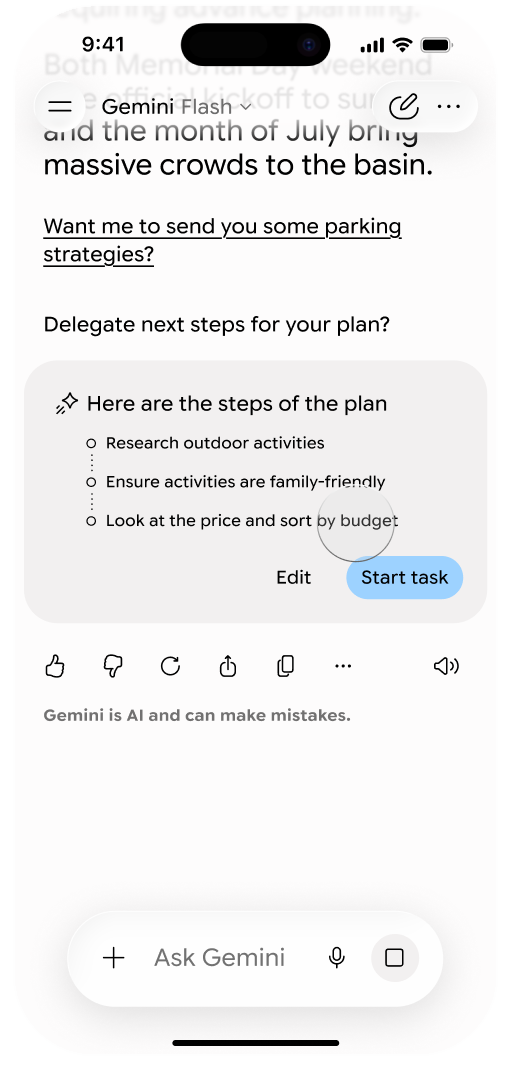
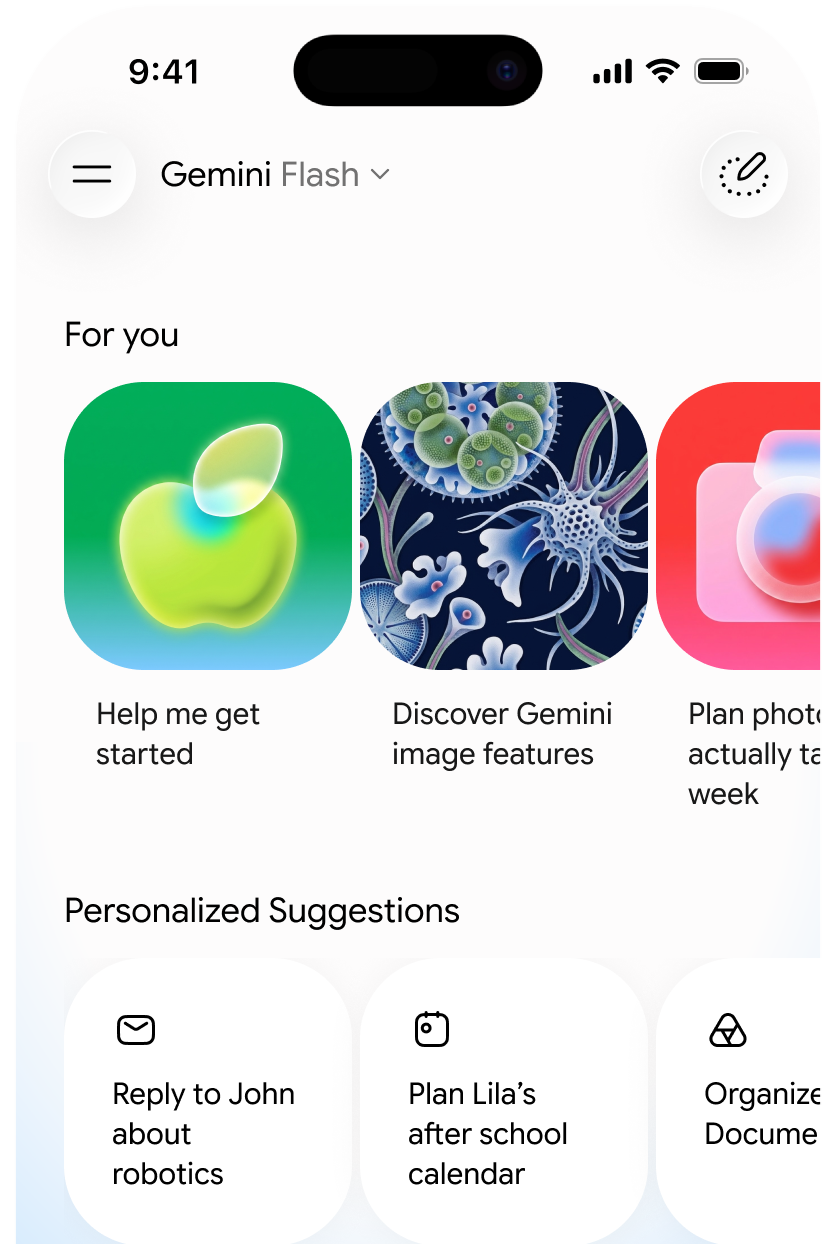
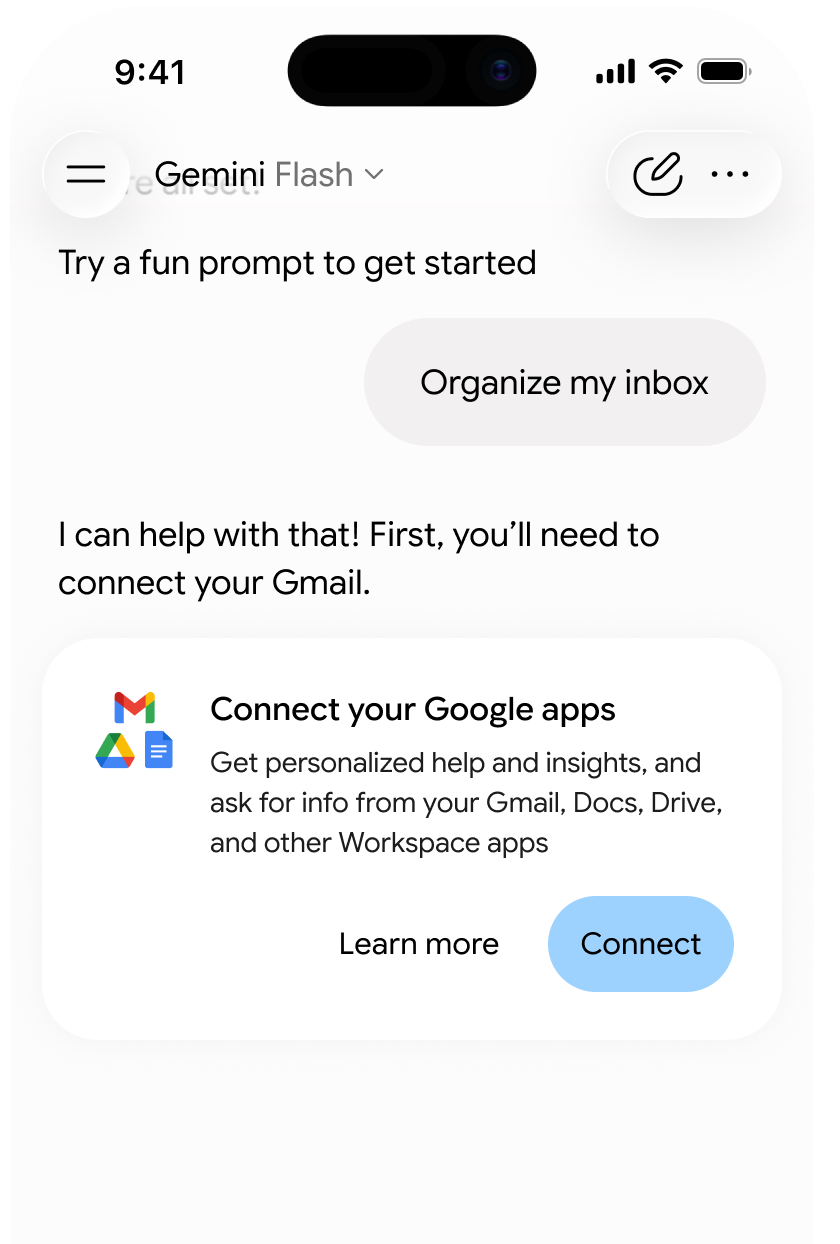
No single mechanism could do all three jobs, so I defined three that work together. First, relevant suggestions that get users to value faster and reduce the pressure to type. Second, the model leads in chat, asking one simple question so it can tailor what comes next. Third, native patterns used cohesively instead of banners to drive business outcomes, teaching users by showing, not telling.
Decision 3
Move faster with a templated flow
To ship and learn quickly, onboarding was built using a template where we could quickly and easily swap out various elements and run quick experiments. I also collaborated with other Gemini designers to create an agent to export JSON files from Figma animations.
Leadership
Making the agent the guide
Most products onboard people with banners, tooltips, and new UI elements that point at features. I pushed for a different approach: make the agent itself the core onboarding primitive, the thing that carries someone from brand new user to high level proficiency. That meant designing a conversation that teaches, instead of layering more interface on top of the product.
Results
What changed
Building onboarding from a templated approach let us test variations quickly and learn what was working for new users. The experience we landed on reduced single query drop off by nearly 5%.