Hi, I’m Ali
I build teams and products that turn complex problems into simple, intuitive human experiences.
You need a password to see my work
Gemini
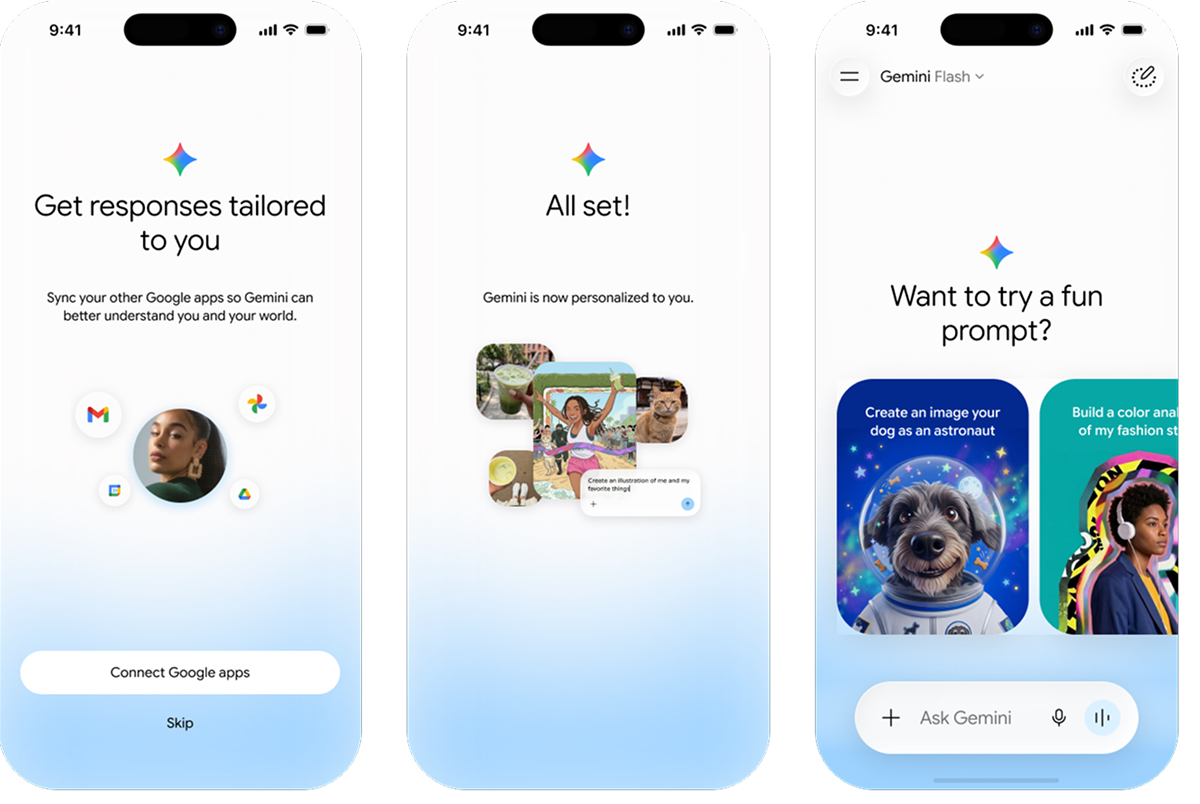
Agent lead onboarding
To address blank slate paralysis and help new Gemini users understand how the tool could support them, I led the design strategy for an agent led discovery and onboarding experience. The initiative minimized upfront friction by using minimal user input to serve personalized, high value starter prompts, paired with an agent that actively teaches users how to craft and refine effective prompts. This guided co-creation loop significantly reduces cognitive load and drives long term user retention.
Gemini
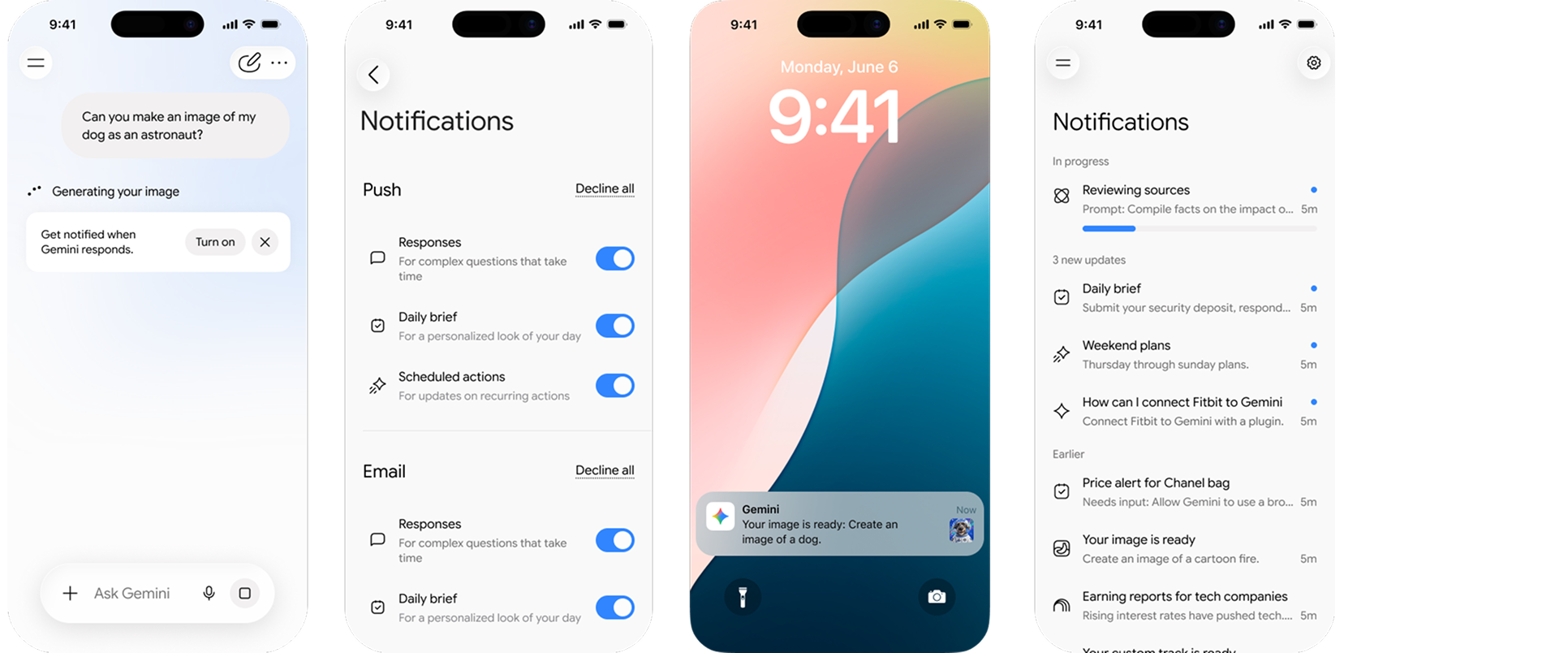
Notifications
Recognizing the need for a cohesive update hub, I spearheaded the initial UX architecture for Gemini’s notification infrastructure. I designed the foundational concepts for push notifications, setting controls, and an in-app activity center, establishing the underlying system patterns.
Navan
Design language refresh
Facing fragmented experiences across Navan caused by conflicting design systems and disparate component libraries, I directed my team through a series of workshops with design leads across the company to align our product pillars around one modernized aesthetic. Over two quarters, we eliminated redundant component logic and established a cohesive visual identity across the entire product suite, unblocking engineers and designers across the company to move significantly faster.
Navan
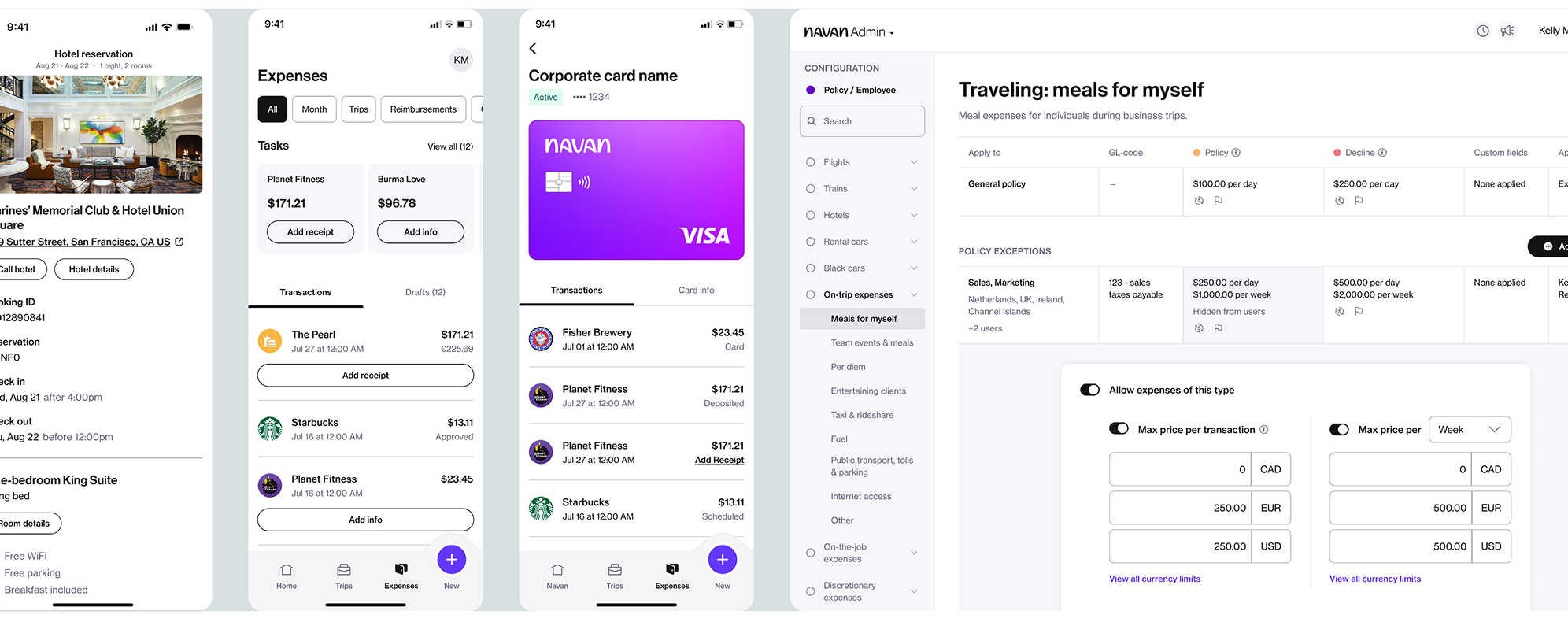
Pragmatic AI
When Navan set out to bring AI into the product, I bet on grounded, high value automation over a high friction chatbot interface. I directed my team through the design of an agentic workflow that takes bulk receipts and automatically compiles them into post-trip expenses, a bet I championed to leadership over the more expected approach, which went on to define the company’s long term AI product roadmap.
Navan
Smart cards
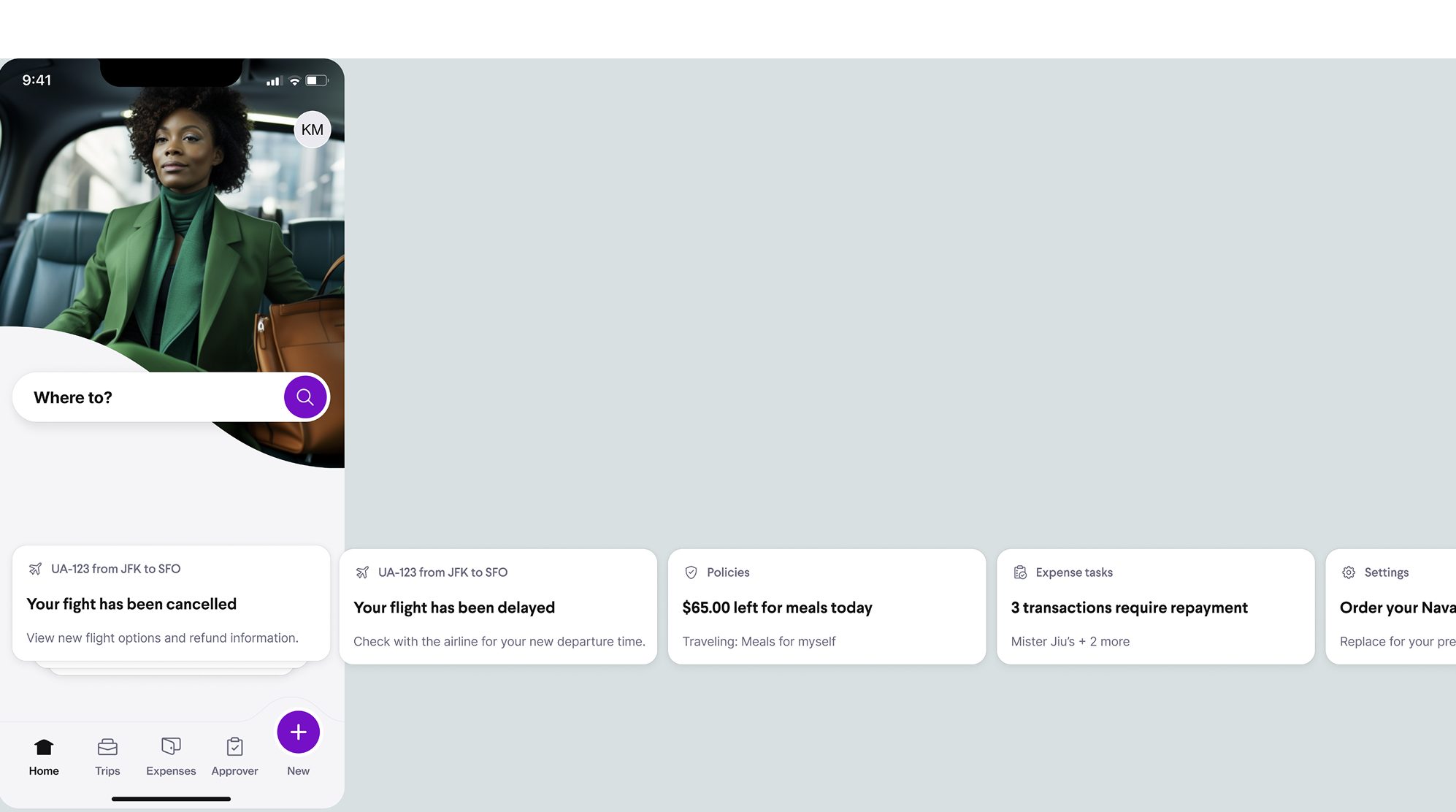
Multiple internal teams were using different solutions to surface notifications on Navan’s home screen, resulting in a disjointed user experience. I set the strategy and directed my team in building the Smart Cards framework, an AI-driven prioritization engine that surfaces the single most urgent action a user needs at any moment. Coordinating designers across the travel and expense pillars, we cut through the clutter and dramatically accelerated task completion for our users.
Navan
Tokenized design system
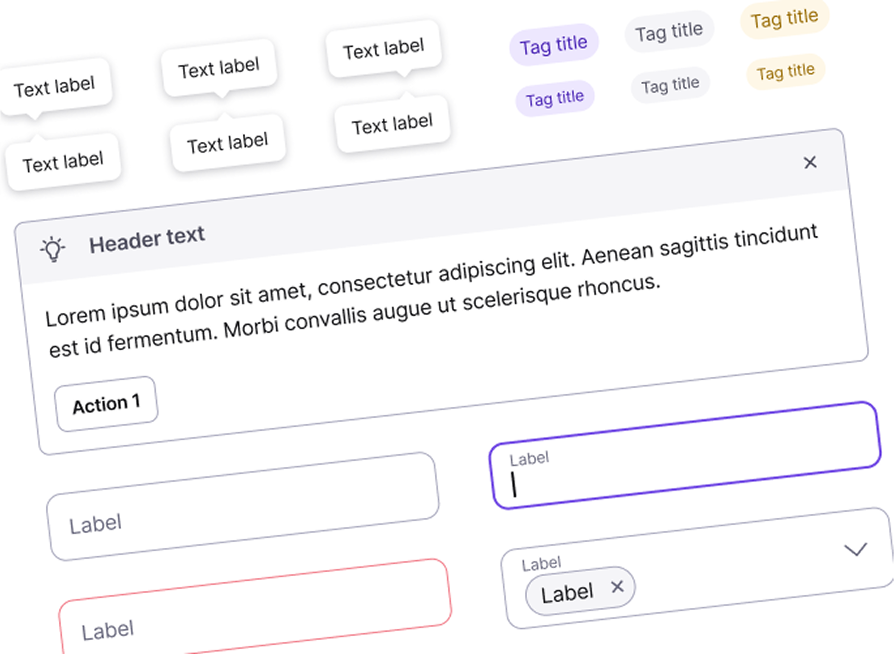
Recognizing a critical engineering bottleneck caused by hard-coded UI elements, I partnered with the Head of iOS and directed my team to architect a scalable, tokenized design system for Navan Expense. The system became the technical foundation for the entire company, letting the Travel pillar merge in seamlessly during a major app consolidation and radically reducing time-to-market.
Instant experiences
When Facebook set out to improve ad experiences, I led the 0-to-1 design strategy for what became Instant Experiences, originally called Canvas, an immersive ad format that eliminated load times and intrusive pop-ups. I later extended it with native shopping and machine learning driven targeting to serve personalized versions of an advertiser’s ad, validating the direction with an early test that lifted conversions 5% before shipping a revised MVP that lifted conversions above 8%. I also built a product that auto generates ads by scraping a company’s website, lowering the barrier for non-technical advertisers and establishing scalable commerce patterns used across the platform. You can check out instant ads here: facebook.com/business/ads/instant-experiences-ad-destination
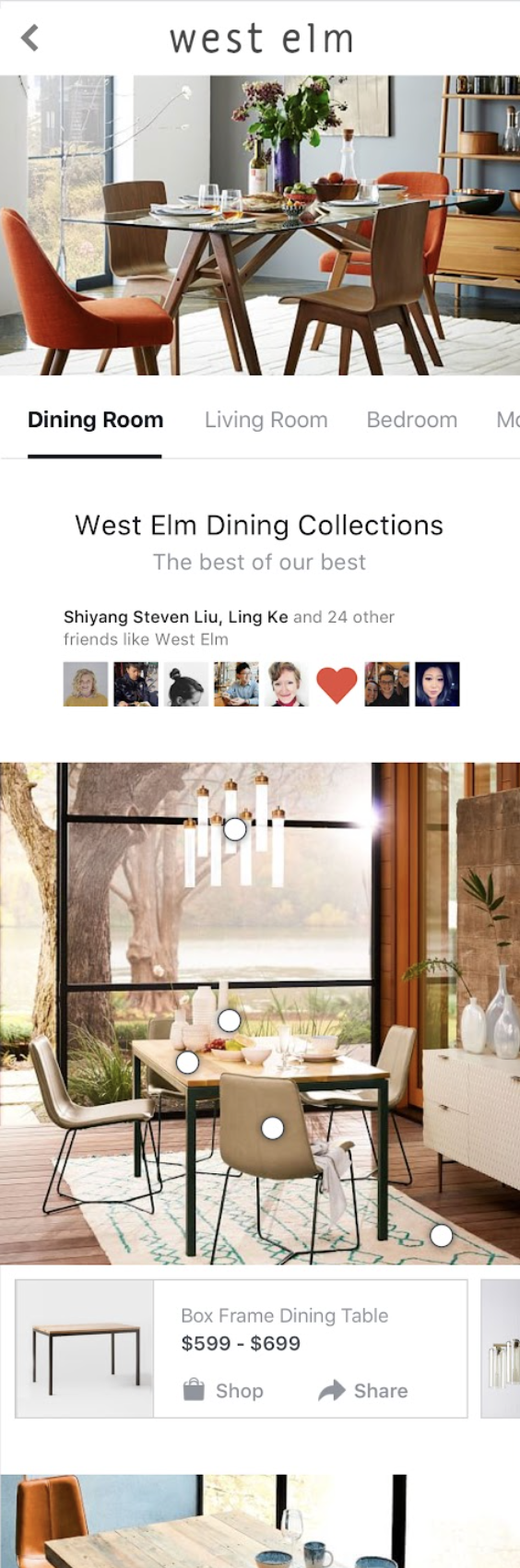
Personalized ad for someone who has been researching tables, frequently converts when they see a product in a lifestyle image, and is more likely to buy something their friends also like.
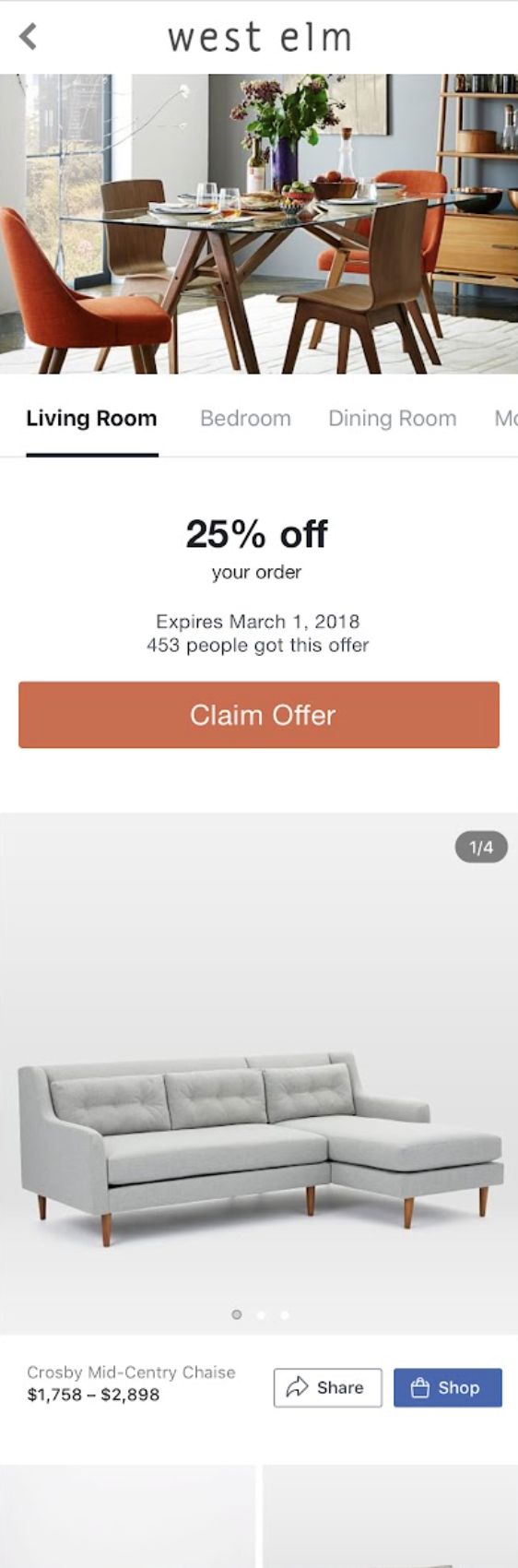
Ad for someone who put two sofas in their West Elm shopping cart yesterday and is more likely to convert if they have a discount.
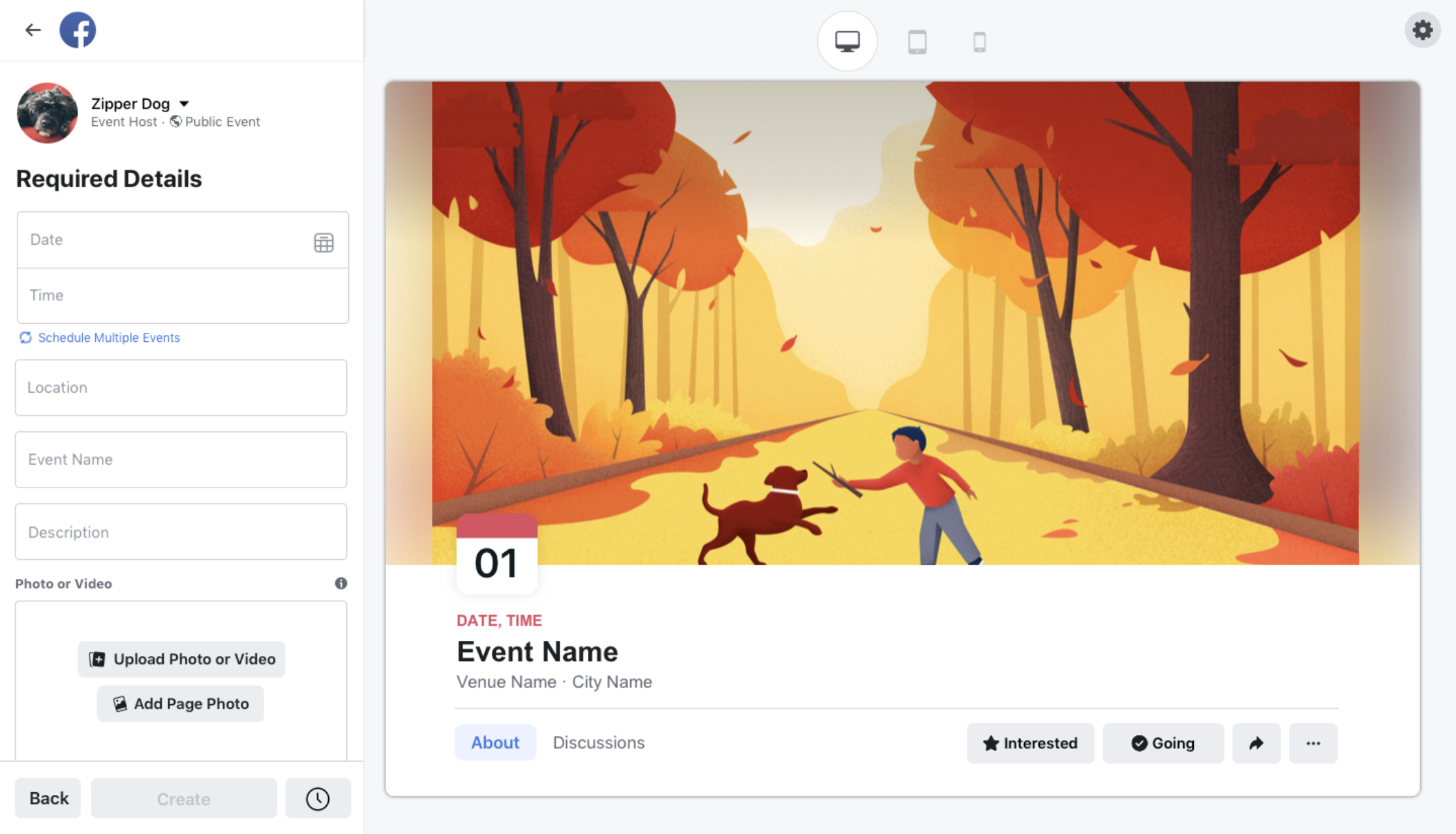
Event creation
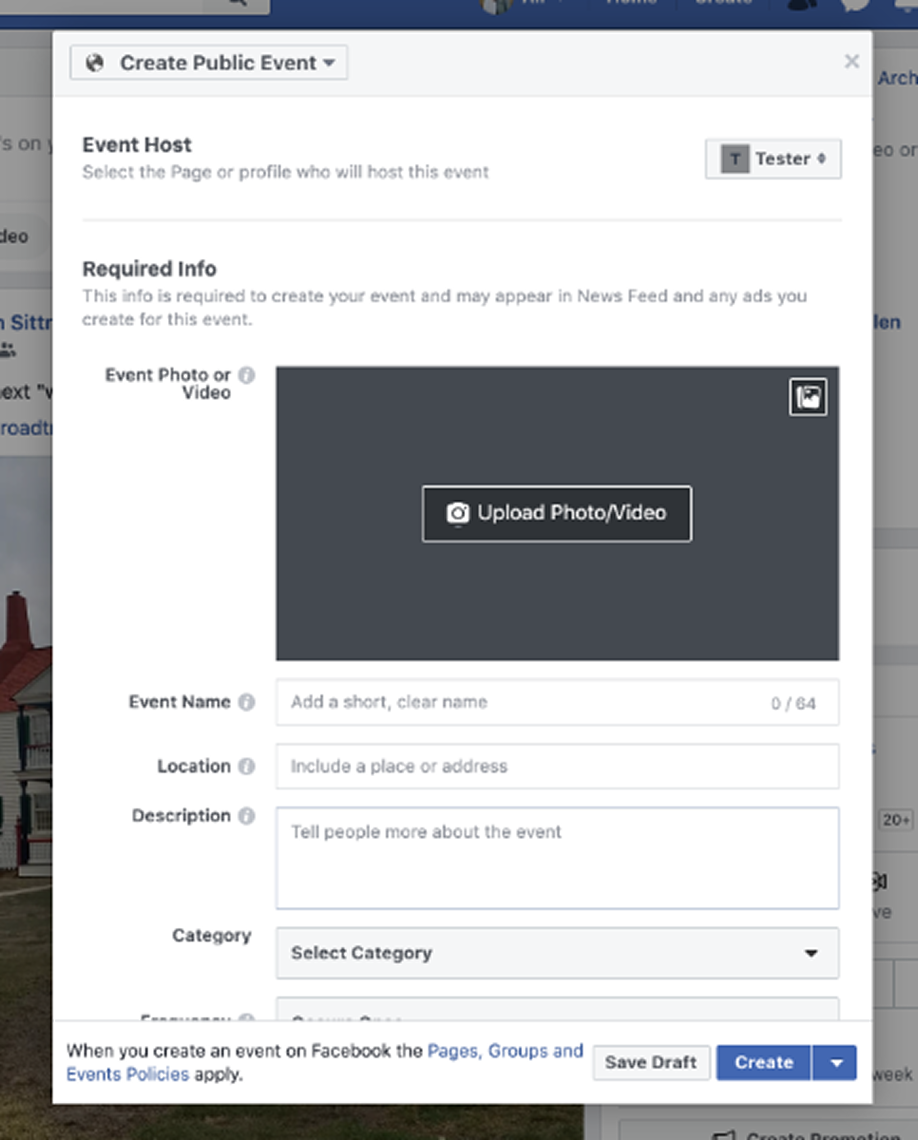
Led the redesign of Facebook Events, focusing on cleaning up a historically complex creation flow that was losing 38% of potential creators within the first five minutes. To build host confidence and reduce friction, I designed a live preview component, allowing creators to see exactly how their event would appear to guests as they built it. The redesign lifted monthly event creators by 7%, cut bounce rate by 8%, and increased the share of events meeting Facebook’s recommendability requirements by 26%. This interaction pattern was subsequently adopted as a core component by both Facebook Marketplace and Facebook Groups, establishing a new standard for creation workflows across the platform.
Before
After