Navan
Smart cards
After Navan’s travel and expense apps were stitched together, expense tasks were taking more than two weeks to complete on average, and admins were having to chase people down to finish them. The tasks still existed, but were now more hidden.
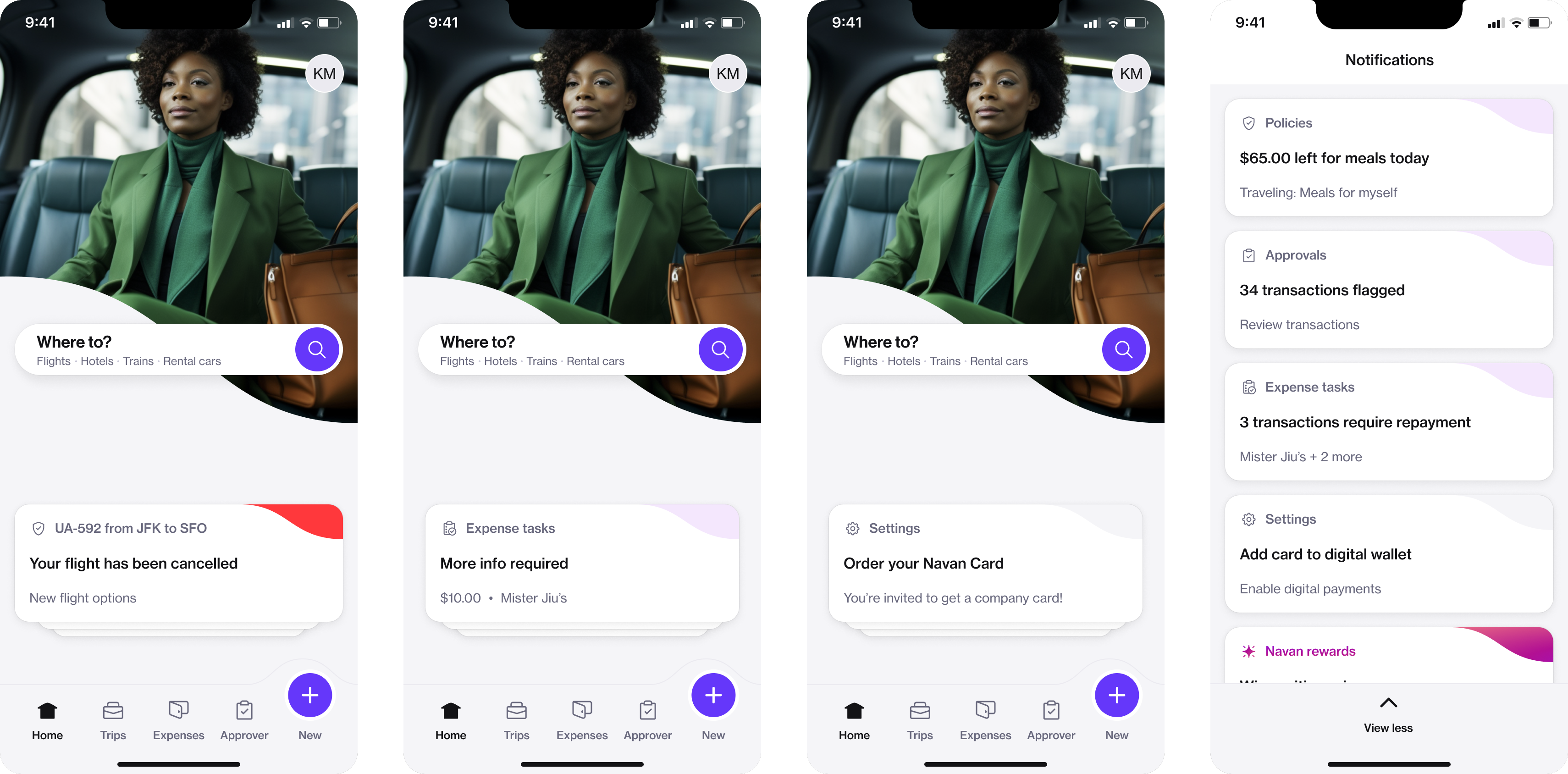
I drove the strategy and directed my team in building Smart cards, a prioritization system that surfaces the most important thing a person needs to do at any moment, across all of Navan. Average task completion went from 14 days to 8.
Context
A prioritization problem, not an expense problem
I started by using AI to pull any NPS comment mentioning expensing tasks, and my team and I spoke with several of those users. The pattern was clear: expense tasks were no longer the first thing people saw when opening the app, so they were getting missed.
Then I talked to our travel researcher, who told me travel users were missing things too, like gate changes, canceled flights, and team travel invites. This was a prioritization problem across the whole product.
Decision 1
Prioritize both products together, with one set of tiers
With our PM, I listed every expense task and prioritized them in a spreadsheet. Then we worked with the travel side to do the same, and prioritized the two lists against each other. A backend engineer built the logic so a person always sees the most important item at any given moment.
The result was a set of tiers that decide what shows up, how long it stays, and whether it can be dismissed. The tiers decide, not whichever team wants the space.
| Tier | Trigger | Push | Persists | Exposure | Dismissible |
|---|---|---|---|---|---|
| 1. Act now | Time-critical | Yes | Until cleared | Top | No |
| 2. Attention | Action due within a week | No | Until cleared | By deadline | No |
| 3. FYI | Informative | No | 3 sessions | Capped | Yes |

Decision 2
Test where marketing fits before arguing about it
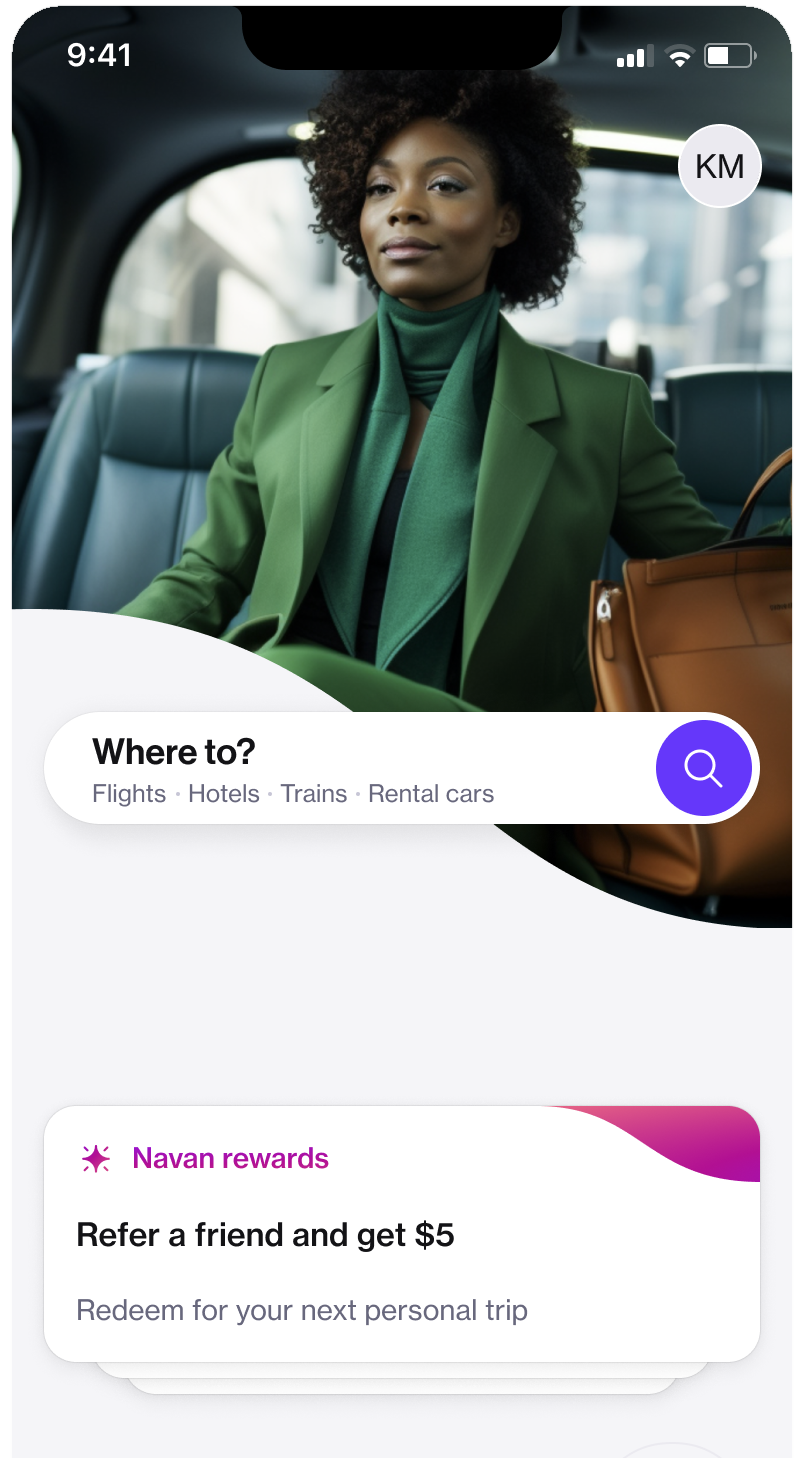
When the growth team wanted to adopt the model, they felt their cards should always rank highest, which would have put “refer a friend and make $5” above “your flight is canceled.” I also hypothesized that marketing at the top would teach people to ignore the whole system.
So we ran an A/B test with marketing cards in the stack and without. It showed quickly that when marketing sat at or near the top, people were less likely to act on the important things, like repaying an expense. Offers became a fourth tier: bottom of the stack, one session a month, and always dismissible.
Decision 3
One flexible card, with color used sparingly
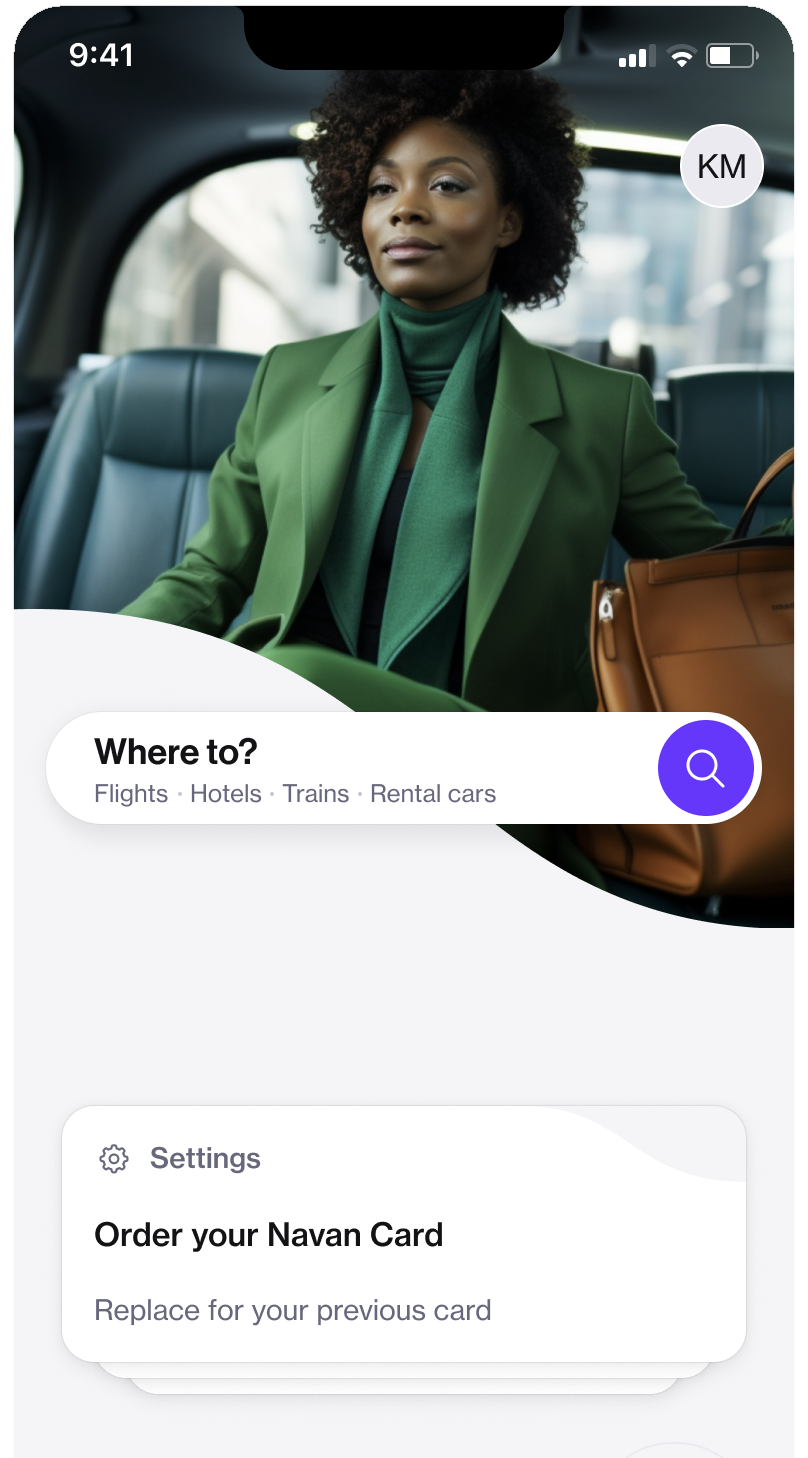
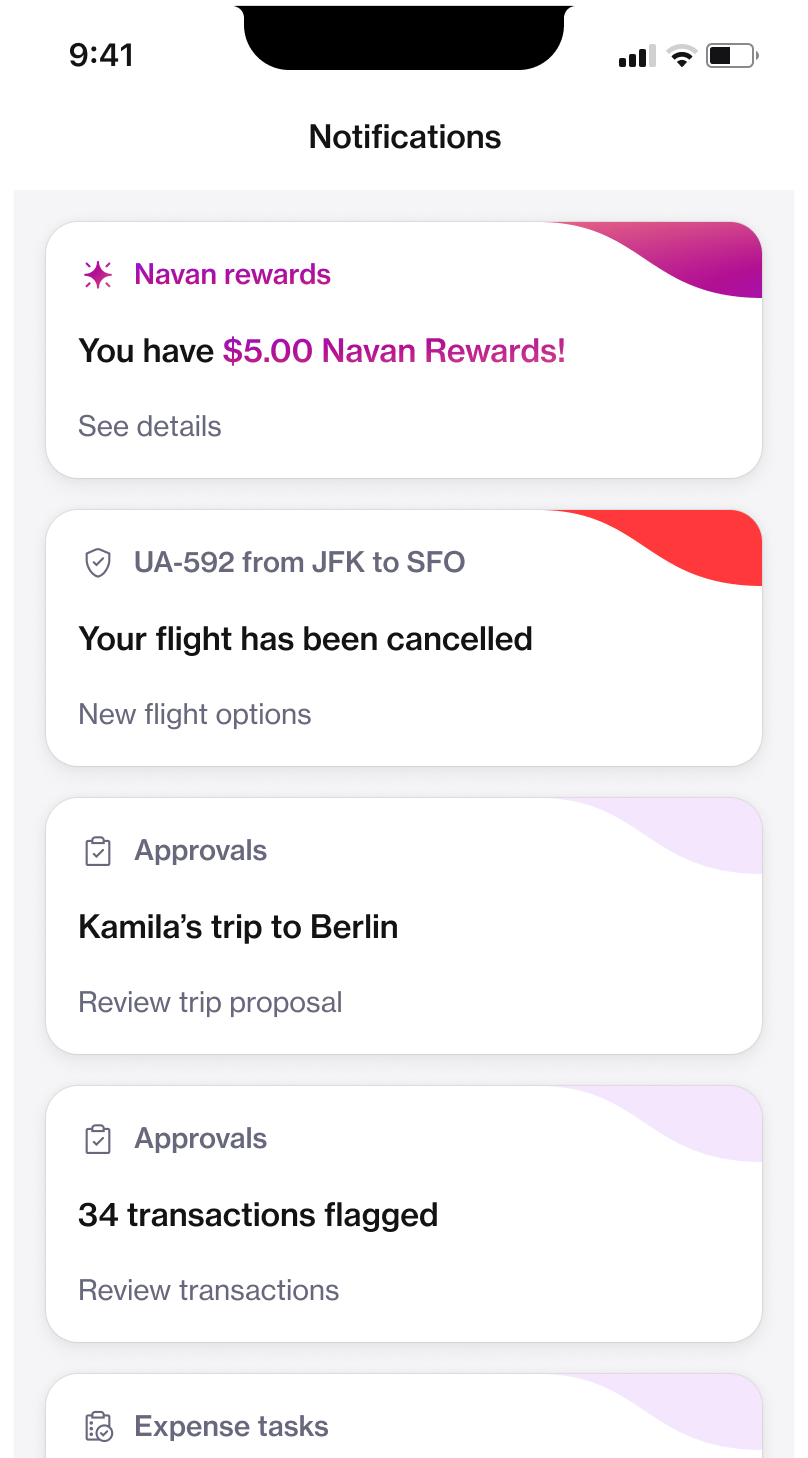
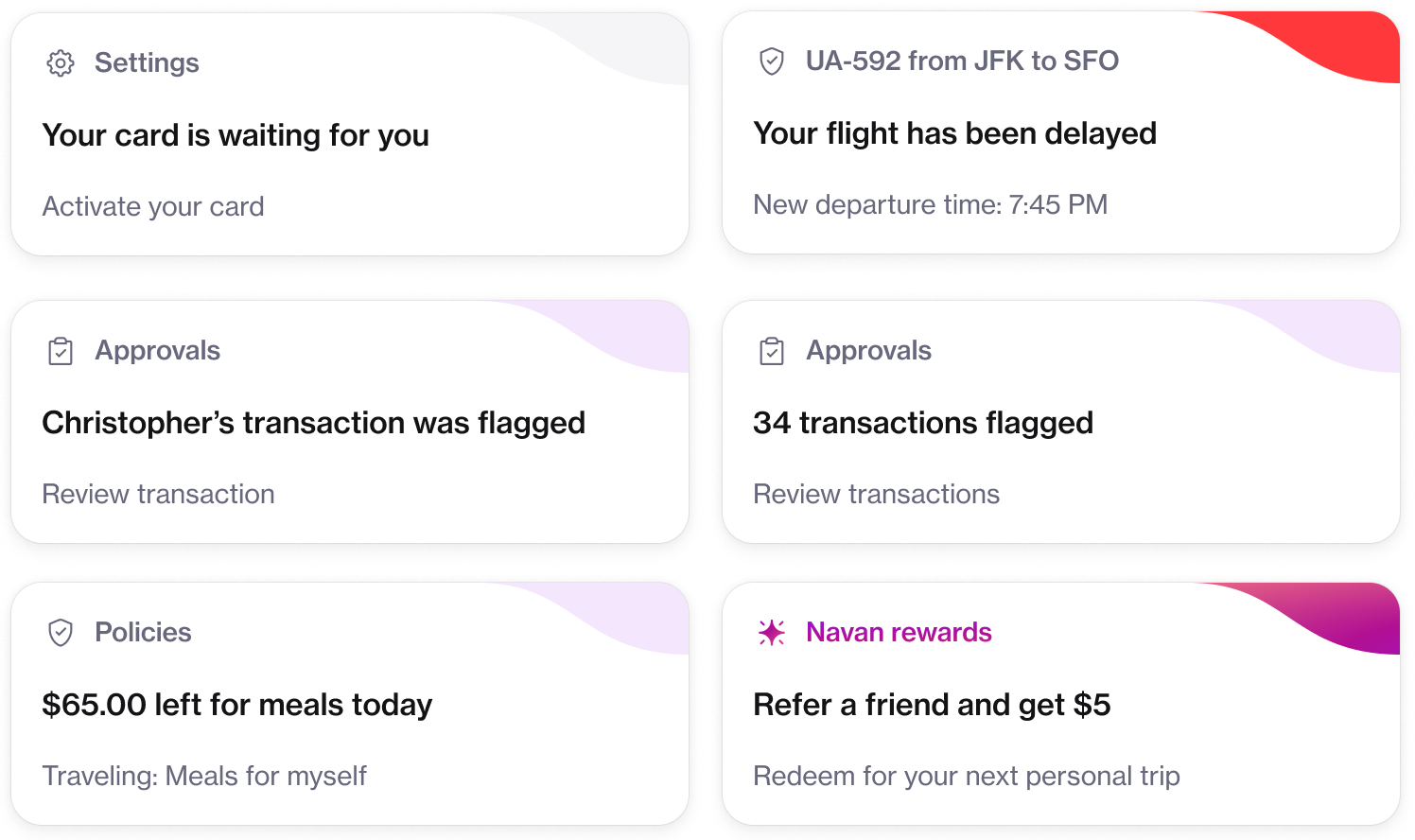
A single card component carries every notification type across travel, expense, approvals, and policies. Everyone wanted color badging on the cards. Our earlier research showed that people do not use Navan often enough to learn what colors mean, so color would be one more thing to decode. I brought that research back and pushed for restraint.
Marketing still got a more colorful card, but they ended up at the end of the stack, and their cards were dismissible.
Leadership
Getting a company to share one stack
Once we had a list of every notification type across travel, expense, and approvals, I brought in an expense designer to create a component flexible enough to work across all of Navan’s products. She stress tested it with every kind of content, and then we shared it with the travel designers, who were excited about it.
The whole company ended up adopting Smart cards, and the top slots became contested. Because the tiers had been agreed up front, I could answer with criteria instead of opinion. A PM took ownership of the permission to add new cards to the stack going forward, so the model kept working without me.
Results
What changed
14 → 8 days
average task completion
11%
fewer support messages about travel updates, on the travel side
Next
What I would explore next
Right before I left, we were exploring how an agent could make Smart cards better by helping the user take action as quickly as possible. For instance, a canceled flight might show a new flight option in the card so a user would only have to tap a few times to switch to a new flight.